
An online presence is the collection of digital channels that help people find, understand, trust, and interact with your business. For a small business, this typically includes a professional website, Google Business Profile, social media, consistent branding, useful content, SEO, and clear ways for customers to contact or buy from you.
You don’t need to build everything at once.
The smarter approach is to create the essential digital assets first, connect them strategically, and expand as your business grows.
Key takeaway: A strong online presence is more than having a website or social media account. It is a connected digital system designed to make your business discoverable, credible, and easy to do business with.
The basic journey looks like this:
Get Found → Build Trust → Provide Value → Create Action → Generate Customers
What Is an Online Presence?
An online presence is everything about your business that customers can discover or interact with on the internet.
This can include:
- Your business website
- Google Business Profile
- Social media accounts
- Search engine results
- Online directories
- Customer reviews
- Blog articles
- Videos
- Podcasts
- Email marketing
- Online advertisements
- E-commerce platforms
Think of it as your business’s digital footprint.
For example, imagine someone recommends a Lagos-based catering company to a potential customer.
The customer may search for the business on Google, visit its website, look through Instagram photos, read reviews, check its menu, and eventually send a WhatsApp message.
All of those touchpoints form part of the company’s online presence.
Online Presence vs. Social Media Presence
A social media presence is only one part of an online presence.
Your Instagram, Facebook, LinkedIn, TikTok, or X account can help you reach and engage an audience. But your website, Google visibility, reviews, search rankings, content, and other digital assets also matter.
This distinction is important because social media platforms are third-party platforms. Your business does not control their algorithms, policies, or reach.
A website, on the other hand, gives you a central digital asset that you can build and improve over time.
Why Does a Small Business Need an Online Presence?
A strong online presence helps potential customers discover your business, evaluate your credibility, and take the next step.
For many businesses, the process looks something like this:
Search → Visit → Evaluate → Trust → Contact → Buy
Here are some of the biggest benefits.
1. Help Customers Find Your Business
People search online when they need information, products, and services.
They might search for:
- “web designer in Lagos”
- “event planner in Abuja”
- “accountant for small business”
- “catering company near me”
- “best hotel in Ilorin”
If your business has no meaningful digital presence, you have fewer opportunities to appear during those searches.
Your website, SEO, Google Business Profile, content, and local listings can all contribute to your visibility.
2. Build Trust and Credibility
People are often hesitant to buy from businesses they don’t know.
A professional website, consistent branding, genuine reviews, useful content, and accurate business information can reduce that uncertainty.
A prospective customer should be able to answer five questions quickly:
Who are you?
What do you offer?
Who do you serve?
Why should I trust you?
How can I contact you?
If your online presence cannot answer those questions clearly, potential customers may move on to a competitor.
3. Reach Customers Beyond Your Immediate Location
Digital channels allow businesses to reach people outside their physical location.
For example, a consultant based in Ibadan could use a website, SEO, LinkedIn, email marketing, and educational content to attract clients from Lagos, Abuja, Port Harcourt, or international markets.
Your physical location doesn’t have to define the full reach of your business.
4. Generate Leads and Sales
The purpose of an online presence isn’t to collect followers or website visitors for their own sake.
It should support business growth.
A useful framework is:
Visibility → Interest → Trust → Action → Customer
For example, a business owner searches Google for a problem, finds your article, visits your website, learns about your service, sees testimonials, and requests a quote.
That’s a much more valuable outcome than simply receiving a page view.
5. Compete With Larger Businesses
Small businesses don’t always have the advertising budgets of larger companies.
But they can compete strategically by becoming highly relevant to a specific audience.
A small web design agency, for example, may not compete nationally for the broad term “web design.”
Instead, it might build authority around topics such as:
- Website design for small businesses
- WordPress websites for service businesses
- Website design in Nigeria
- SEO-friendly business websites
The objective isn’t to be everywhere.
It’s to be visible and credible where your ideal customers are looking.
The 7 Essential Elements of a Small Business Online Presence
A strong digital presence doesn’t depend on one platform.
It combines several assets that work together.
1. A Professional Business Website
Your website should be the central hub of your online presence.
It gives potential customers a place to understand your business, explore your services, evaluate your credibility, and take action.
A good business website should make these things obvious:
- What you do
- Who you serve
- What you offer
- Why customers should choose you
- How customers can contact you
- What they should do next
What Pages Should a Small Business Website Have?
Most service-based businesses should consider:
- Homepage
- About page
- Services or Products page
- Contact page
- FAQ section
- Testimonials or case studies
- Privacy and legal pages where applicable
You may also need dedicated pages for individual services.
For example, instead of placing Website Design, SEO, Branding, and Social Media Management on one generic services page, a digital agency could create dedicated service pages for each offering.
This improves both the customer experience and the website’s ability to target relevant search queries.
Internal link opportunity: What Pages Should a Business Website Have?
Internal link opportunity: How Much Does a Website Cost? A Complete Pricing Guide
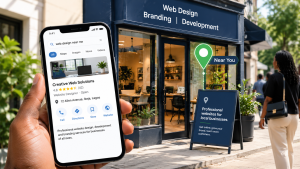
2. A Google Business Profile
For businesses that serve specific locations, Google can be one of the most valuable discovery channels.
A properly maintained Google Business Profile can help potential customers find important information such as:
- Business name
- Business category
- Address or service area
- Opening hours
- Phone number
- Website
- Photos
- Customer reviews
Consider someone searching:
“digital marketing agency near me”
That person isn’t simply looking for information about digital marketing. They may be actively looking for a provider.
Why Is Google Visibility Important for Local Businesses?
Local searches often have strong commercial intent.
Someone searching “plumber near me” is generally closer to contacting a plumber than someone searching “what does a plumber do?”
That’s why local SEO is particularly important for businesses that depend on customers in specific cities, regions, or service areas.
Internal link opportunity: What Is Local SEO and How Does It Work?
3. Professional Social Media Profiles
Social media helps businesses build awareness, communicate with customers, distribute content, and demonstrate expertise.
But you don’t need to be active on every platform.
Choose channels based on:
- Your target audience
- Your industry
- Your content strengths
- Your marketing objectives
- Your available resources
For example:
A B2B consulting firm may prioritize LinkedIn.
A fashion brand may focus on Instagram and TikTok.
A restaurant may benefit from Instagram, TikTok, Google, and review platforms.
A professional service provider might combine LinkedIn, a website, SEO, and email marketing.
The important thing is to build a relevant and sustainable presence, rather than opening accounts everywhere and abandoning them.
Make sure your profiles have:
- Consistent branding
- Clear descriptions
- Accurate contact details
- A link to your website
- Appropriate profile and cover images
- A clear reason for customers to follow or contact you
Internal link opportunity: How to Create a Social Media Strategy for a Business
4. Consistent Branding
Your business should look and sound recognizable across its digital channels.
Imagine visiting a company’s website and then finding an Instagram account with completely different colors, messaging, imagery, and tone.
Even if the business is legitimate, the inconsistency can reduce perceived professionalism.
A brand identity can include:
- Logo
- Color palette
- Typography
- Photography style
- Graphic style
- Tone of voice
- Messaging
- Brand positioning
Brand consistency doesn’t mean every piece of content must look identical.
It means customers should feel that they are interacting with the same business wherever they encounter it.
Internal link opportunity: What Is a Brand Identity?
Internal link opportunity: How to Build a Brand Identity for a Small Business
5. Search Engine Optimization
Search engine optimization, or SEO, is the process of improving your website and content so search engines can understand them and users can discover them through relevant searches.
For a small business, SEO can include:
- Keyword research
- Search-friendly website content
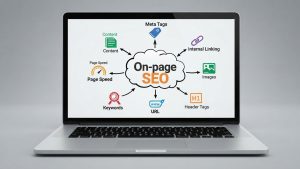
- Optimized page titles
- Descriptive headings
- Internal linking
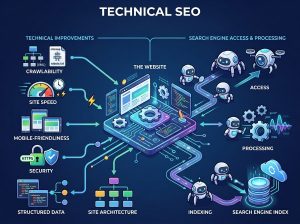
- Technical SEO
- Local SEO
- Mobile usability
- Website performance
- Helpful content
For example, a commercial cleaning company shouldn’t necessarily have one generic page called “Our Services.”
It could create dedicated pages for:
- Office cleaning
- Industrial cleaning
- Post-construction cleaning
- Commercial carpet cleaning
If those services are genuinely offered and people search for them, dedicated pages can make the website more useful to both visitors and search engines.
SEO is a long-term strategy. A new website shouldn’t be expected to dominate competitive search results immediately.
The objective is to consistently build relevance, usefulness, authority, and trust.
Internal link opportunity: What Is SEO? A Beginner’s Guide
Internal link opportunity: How to Do Keyword Research for a Business Website
Internal link opportunity: On-Page SEO: What It Is and How to Do It
6. Useful Content
Content gives people another reason to discover your business.
Instead of constantly saying, “Buy from us,” you can answer questions your potential customers are already asking.
Content can include:
- Blog posts
- Guides
- Videos
- Case studies
- FAQs
- Social media posts
- Podcasts
- Email newsletters
- Infographics
For example, a web design company could publish:
- How Much Does a Website Cost?
- What Pages Should a Business Website Have?
- Why Is My Website Not Showing on Google?
- WordPress vs Website Builders: Which Is Better?
- How to Plan a Website Before Hiring a Web Designer?
These articles can attract potential customers before they are ready to contact the company.
What Should a Small Business Create Content About?
Start with customer questions.
Ask:
- What do customers ask before buying?
- What problems do they have?
- What mistakes do they commonly make?
- What options are they comparing?
- What information would make them more confident?
- What objections prevent them from buying?
Those questions can become your content strategy.
Internal link opportunity: How to Create a Content Strategy for Your Business
7. A Clear Way to Convert Visitors Into Customers
Traffic alone doesn’t grow a business.
Your digital presence needs a clear conversion path.
Depending on your business model, a conversion could be:
- A phone call
- WhatsApp message
- Contact form submission
- Quote request
- Appointment booking
- Product purchase
- Consultation request
- Email signup
Every important page should give visitors a logical next step.
For example:
Need a professional website? Request a consultation.
Or:
Ready to improve your online presence? Get a quote.
The right call to action depends on the customer’s intent and where they are in the buying journey.
Internal link opportunity: Why Visitors Leave Your Website Without Buying
How to Build an Online Presence Step by Step
You don’t need to launch every digital channel on day one.
Follow a structured process.
Step 1: Define Your Target Customer
Start by identifying who you want to reach.
Ask:
- Who is my ideal customer?
- What problem are they trying to solve?
- What do they value?
- Where do they search for solutions?
- What concerns could stop them from buying?
Instead of saying:
“Our audience is small businesses.”
Be more specific:
“We help growing service businesses in Nigeria that need a professional website and stronger online visibility.”
The second description provides much more direction for your website, content, branding, SEO, and marketing.
Step 2: Define Your Business Positioning
Your positioning explains what you offer, who you serve, what problem you solve, and why you’re different.
Start with four questions:
- What do we offer?
- Who is it for?
- What problem do we solve?
- Why should customers choose us?
For example:
We help growing service businesses build professional digital brands and websites that turn online visibility into business opportunities.
Your positioning should influence your website copy, social media content, advertising, and sales messaging.
Step 3: Build Your Website
Build your website around your customer’s journey rather than simply filling pages with information.
Prioritize:
- Clear messaging
- Strong homepage
- Dedicated service or product pages
- Easy contact options
- Mobile responsiveness
- SEO foundations
- Website security
- Analytics
Before launching, test the website as a customer would.
Can someone understand what you do within a few seconds?
Can they find your services?
Can they find your contact details?
Can they complete the desired action from a mobile phone?
A website should solve a business problem—not simply exist.
Internal link opportunity: How to Plan a Website Before Hiring a Web Designer
Step 4: Establish Your Google Presence
Make sure customers can find accurate information about your business.
Where relevant, maintain:
- Correct business name
- Appropriate category
- Service area
- Opening hours
- Phone number
- Website
- Quality business photos
- Genuine customer reviews
Keep information consistent across your website and other business listings.
Never rely on fake reviews or misleading information to manipulate rankings.
Long-term local visibility is built on accurate information and a good customer experience.
Step 5: Choose the Right Social Media Channels
Don’t choose platforms simply because your competitors use them.
Ask:
Where does my target customer actually spend time?
Then consider what kind of content your business can realistically produce.
Start with one or two relevant channels if necessary.
A smaller, well-managed presence is often more valuable than six abandoned profiles.
Step 6: Establish Consistent Branding
Create simple brand guidelines covering:
- Logo usage
- Colors
- Fonts
- Imagery
- Tone of voice
- Key messages
Apply them consistently across your:
- Website
- Social media
- Advertising
- Presentations
- Marketing materials
The goal is recognition.
When someone sees your content without seeing your business name, they should still have a reasonable chance of recognizing the brand.
Step 7: Create a Content Strategy
Stop asking:
“What should we post today?”
Instead ask:
“What does our customer need to know before choosing us?”
Organize content around four stages:
Educate
Explain concepts and answer common questions.
Help
Provide practical solutions to customer problems.
Demonstrate
Show your expertise, processes, results, case studies, and experience.
Convert
Give qualified prospects a clear next step.
This approach makes content more useful and gives every piece of content a purpose.
Internal link opportunity: How to Create a Content Strategy for Your Business
Step 8: Make Your Business Easy to Contact
Test your online presence from a customer’s perspective.
Can someone quickly:
- Find your phone number?
- Send a WhatsApp message?
- Submit an enquiry?
- Request a quote?
- Book an appointment?
- Find your location?
- Understand what happens next?
Every unnecessary step creates friction.
If someone is ready to contact you, don’t make them hunt for the contact button.
Step 9: Track What Matters
You can’t improve what you don’t measure.
Depending on your goals, monitor:
- Website traffic
- Search impressions
- Search clicks
- Keyword rankings
- Leads
- Phone calls
- Form submissions
- Bookings
- Purchases
- Social engagement
- Conversion rate
Don’t judge your entire digital strategy by follower count.
A business with 1,000 highly relevant website visitors and 30 qualified enquiries may be performing far better than one with 50,000 visitors and no meaningful conversions.
The important question is:
Is your online presence contributing to business growth?
How Much Does It Cost to Build an Online Presence?
There is no universal price for building an online presence.
The investment depends on factors such as:
- Business size
- Business model
- Website complexity
- Branding requirements
- SEO needs
- Content requirements
- Advertising budget
- Technology integrations
- Ongoing management
Basic Online Presence
A new or very small business might start with:
- Basic brand identity
- Professional domain
- Simple website
- Google Business Profile where applicable
- Social media profiles
This establishes a basic digital foundation.
Professional Online Presence
A growing business may need:
- Custom website
- Professional brand identity
- SEO
- Content strategy
- Social media management
- Analytics
- Conversion-focused website structure
This creates a stronger foundation for visibility and lead generation.
Advanced Digital Presence
More complex businesses may add:
- E-commerce
- Online advertising
- CRM integration
- Marketing automation
- Advanced SEO
- Conversion optimization
- Website maintenance
- Cybersecurity
- Business process integrations
The right investment depends on the outcome you’re trying to achieve.
A local restaurant, B2B consulting firm, online retailer, and professional service company will not need the same digital setup.
Internal link opportunity: How Much Does a Website Cost? A Complete Pricing Guide
10 Common Online Presence Mistakes Small Businesses Make
Building an online presence is important, but building it without a strategy can waste time and money.
1. Relying Only on Social Media
Social media is valuable, but it shouldn’t necessarily be your entire digital foundation.
Your website gives you a central asset you control and can build over time.
2. Having an Outdated Website
Broken links, inaccurate information, poor mobile usability, slow performance, and outdated branding can damage credibility.
Your website should evolve with your business.
3. Using Inconsistent Branding
Different logos, colors, messages, and visual styles across platforms can make the business feel fragmented.
4. Creating Content Without a Strategy
Random posting can consume time without generating meaningful business results.
Content should answer customer questions and support business objectives.
5. Ignoring Google Search
Customers may search for your business, your services, or the problems you solve.
If you’re absent from search, competitors may capture that demand.
6. Trying to Be Everywhere
More social media accounts don’t automatically create more customers.
Choose the platforms where your audience and business objectives overlap.
7. Focusing on Followers Instead of Customers
Followers are an audience metric.
Leads, sales, bookings, and enquiries are business outcomes.
8. Making It Difficult to Contact You
A customer who can’t quickly find your contact details may simply leave.
9. Ignoring Website Security
Your website is a business asset.
Use strong credentials, secure hosting, backups, software updates, and other appropriate security measures to reduce avoidable risks.
10. Never Measuring Results
If you don’t measure performance, you can’t confidently determine what’s working.
Small Business Online Presence Checklist
Use this checklist to quickly assess your digital foundation.
Website
- Professional domain
- Mobile-friendly design
- Clear business description
- Services or products clearly explained
- Contact information
- Clear calls to action
- HTTPS/security
- Analytics
- Google Business Profile established where applicable
- Accurate business information
- Correct category
- Business photos
- Genuine customer reviews
- Website connected
Social Media
- Relevant platforms selected
- Complete profiles
- Consistent branding
- Contact information
- Content strategy
- Sustainable publishing schedule
Branding
- Logo
- Brand colors
- Typography
- Consistent visual style
- Clear messaging
- Defined positioning
SEO
- Keyword research
- Optimized website pages
- Useful content
- Internal linking
- Technical SEO foundations
- Local SEO where relevant
Conversion
- Clear calls to action
- Contact form
- Phone or messaging option
- Quote or booking system where relevant
- Conversion tracking
How Do You Know If Your Online Presence Is Working?
A successful online presence should be measured at multiple levels.
Visibility
Are people finding you?
Monitor:
- Search impressions
- Search rankings
- Website traffic
- Google visibility
Engagement
Are people interacting with your digital assets?
Look at:
- Page engagement
- Returning visitors
- Social interactions
- Content engagement
Conversion
Are people taking meaningful actions?
Track:
- Leads
- Calls
- Enquiries
- Bookings
- Quote requests
- Purchases
Revenue
Ultimately, the most important question is:
Is your digital presence contributing to business growth?
High traffic isn’t automatically valuable.
The right audience taking meaningful actions is what matters.
Frequently Asked Questions About Building an Online Presence
What is the best way to build an online presence for a small business?
Start by defining your target customer and business positioning. Then build a professional website, establish your Google presence, choose relevant social media channels, create consistent branding, publish useful content, and make it easy for visitors to contact or buy from you.
Does a small business really need a website?
A website is a valuable long-term digital asset for most businesses because it provides a central place to communicate your brand, explain your services, publish content, build search visibility, and convert visitors into customers.
How much does it cost to build an online presence?
The cost varies according to your website, branding, SEO, content, advertising, technology, and ongoing management requirements. A simple business presence costs less than an e-commerce or highly integrated digital system.
Can I build an online presence without a website?
Yes. You can use social media, Google, online directories, marketplaces, and other platforms. However, relying entirely on third-party platforms limits your control and gives your business no central digital hub.
Which social media platform is best for a small business?
There is no universal best platform. Choose based on where your target customers spend time, what content they consume, and what your business needs the platform to accomplish.
How long does it take to build an online presence?
Setting up the basic digital assets can happen relatively quickly. Building meaningful search visibility, audience trust, content authority, and consistent lead generation takes longer. An online presence is an ongoing business asset, not a one-time project.
How can I get my small business found on Google?
Start with a professional, search-friendly website, relevant content, keyword research, a properly maintained Google Business Profile where applicable, accurate business information, and local SEO if your business serves a specific area.
What should a small business post online?
Create content around the questions, problems, concerns, and decisions your customers face. Useful topics include educational guides, practical tips, FAQs, case studies, product or service information, customer stories, and demonstrations of your expertise.
How do I know whether my online presence is successful?
Measure meaningful outcomes such as search visibility, website engagement, enquiries, calls, bookings, leads, purchases, and revenue. Followers and traffic are useful supporting metrics, but they shouldn’t be your only measures of success.
Should I hire a professional to build my business’s online presence?
DIY tools can work for simple requirements. Professional support becomes particularly valuable when you need strategic branding, custom website development, SEO, social media management, conversion optimization, integrations, or a scalable digital growth system.
Build a Digital Ecosystem, Not Just Social Media Accounts
A successful online presence isn’t about creating as many accounts as possible.
It’s about building a connected system where every digital asset has a job.
Your brand establishes recognition and perception.
Your website provides a central place to learn, evaluate, and take action.
Your Google presence and SEO help potential customers discover you.
Your social media and content build awareness and demonstrate expertise.
Your conversion systems turn attention into enquiries, bookings, and sales.
Your analytics show you what is working and where to improve.
The ecosystem looks like this:
Brand → Website → Google → Social Media → Content → SEO → Conversion → Measurement
You don’t have to build everything at once.
Start with the assets your customers need most. Build a strong foundation, connect your channels, measure the results, and expand strategically as your business grows.
Need Help Building Your Online Presence?
Penetralia Hub helps businesses build stronger digital foundations through website design and development, branding, SEO, social media, and digital growth strategies.
If you’re unsure what to build first, start with your business goals—not the technology.
Your online presence should ultimately do more than make your business look active online.
It should help you get found, build trust, generate opportunities, and grow.
Build your presence. Strengthen your brand. Get found. Grow your business.